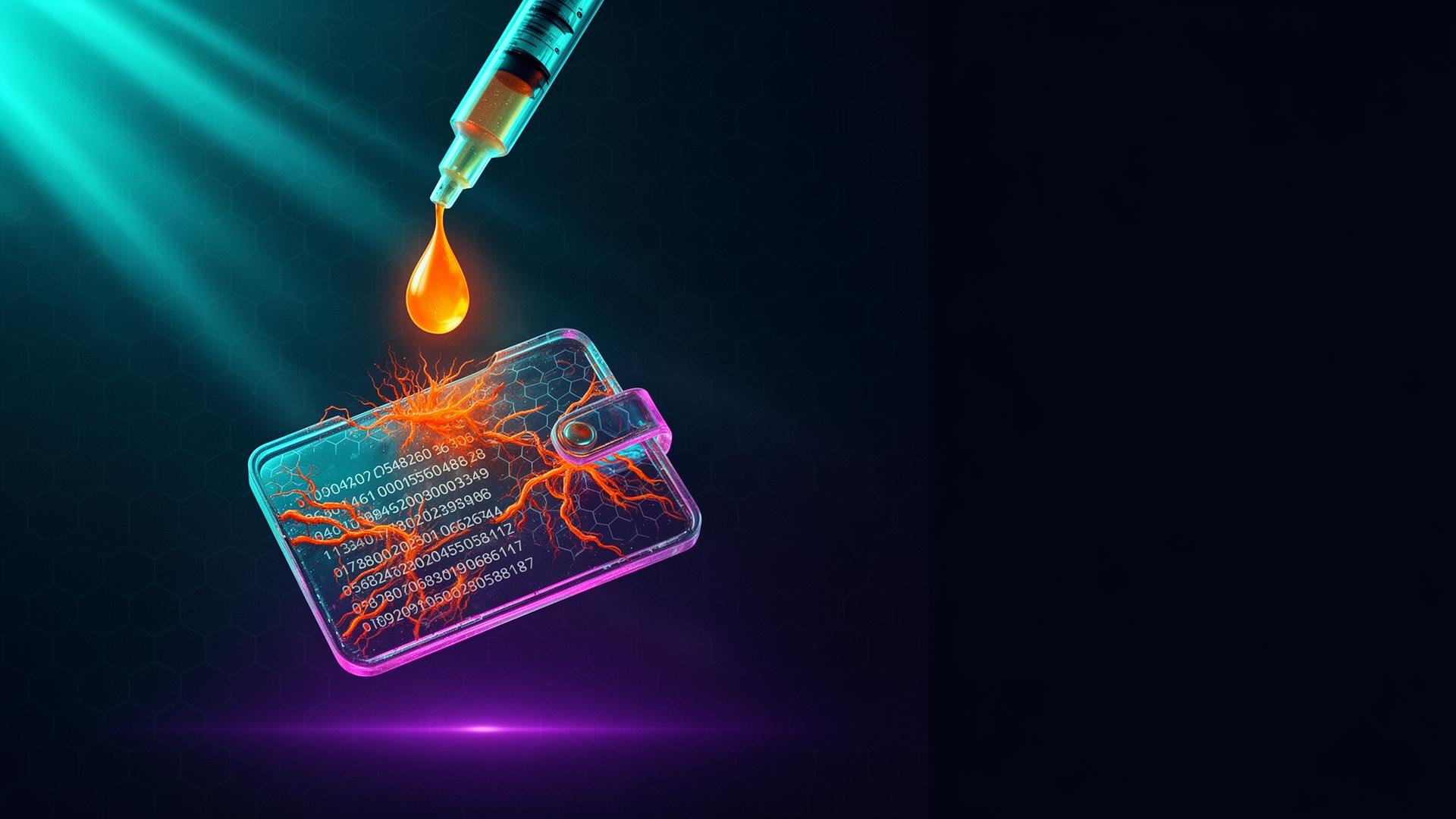
Address Poisoning: When Gas Is Cheap, the Bots Feast
Same first four characters. Same last four. Different owner. Your money's new landlord.
Bitcoin dumps. Gas fees crater to $0.08. And somewhere in a server rack, a thousand bots wake up like cockroaches after the lights go out. They don't care about your portfolio — BTC, ETH, USDC, your grandmother's wrapped DOGE — they care about your transaction history. One dust transaction, $0.001, and your wallet is poisoned. The next time you copy-paste an address, you'll send everything to a criminal aggregator hub sitting on $1.3 million in stolen assets. The address looked right. The 34 characters in the middle that you skipped? Those belonged to someone who just bought a boat.
Why This Explodes When Bitcoin Is Down
Address poisoning is a volume game. Volume games love cheap gas. When ETH gas drops below $0.15 — which happens every time Bitcoin tanks and crypto Twitter goes quiet to process their grief — the cost to poison one wallet drops to $0.10. A bot that costs $50/day in a bull market? Three dollars in a bear. Same bot. Same code. Same victims. Ten times the volume. The bots aren't buying the dip, mate — they're harvesting it.
When the market bleeds, the bots feed. Your panic is their productivity.
- The FBI issued a warning on March 20, 2026 about fake Tron tokens impersonating the FBI to phish victims. The tokens appear in wallets with messages claiming the recipient is under investigation for anti-money laundering violations — address poisoning escalated to the next level.
- Scammers direct users to external websites to 'verify identity' and prevent asset freezes. The FBI confirmed it does NOT issue tokens or request personal data. Hang up. Ignore. Report.
- This is the same social engineering we documented in our 'Recovery Scam' section — attackers now use on-chain tokens as phishing vehicles instead of just DMs and calls. The Tron chain remains a minefield for dust attacks.
The $9,850 Copy-Paste
March 1st, 2026. A crypto user with a Ledger and a Coinbase account who's done this a hundred times. Routine USDC transfer. Confirms. Closes the app. Life goes on.
Within 200 milliseconds — the time it takes you to blink — a bot flags the transaction, generates a lookalike address matching first 4 and last 4 characters in under 90 seconds, and sends 0.001 USDT from it to the victim's wallet. Cost: $0.47. Less than a vending machine coffee. The ROI would make a hedge fund manager weep.
Three days later, the victim copies from transaction history instead of the source. 9,850 USDC. Gone. Irreversible. The address looked identical in the truncated view. It wasn't. The blockchain doesn't have a customer service department.
It didn't need you to be dumb. It needed you to be busy.
The Criminal Machine: Dust to $1.3M Hub
Forget the hoodie-wearing hacker fantasy. Address poisoning is a factory — silent, automated, running 24/7 on a $2/month VPS with zero human interaction. The attacker never messages you. Never calls. They pollute your transaction history with one tiny transaction and wait for you to do the rest. Outsourcing the crime to the victim. Genius, if it weren't so despicable.
It works on everything. USDC, USDT, ETH, wrapped BTC, DAI — any address-based blockchain. Bitcoin mainnet? Same trick. Tron? Massive playground. The bots don't discriminate. Stablecoins are the favorite entrée because stolen USDC is worth exactly $1 tomorrow. Stolen ETH might be $0.50 by cashout. Criminals love certainty. Don't we all.
Within minutes — often under 10 — an automated sweep sends stolen funds to a centralized aggregator hub. One wallet. Hundreds of victims. On-chain analysis shows over $1.3 million in stolen assets, with new deposits arriving every few hours like clockwork. The address is on Etherscan for anyone to see — a confession in permanent marker on the blockchain.
The hub holds $1.3 million. Visible on-chain. Everyone can see it. Nobody's frozen it. Welcome to crypto justice — where the evidence is perfect and the consequences are optional.
Vocabulary Decoded: What These Words Actually Mean
The terms sound technical enough to make you feel like you need a computer science degree. The reality is embarrassingly simple — and that's the point. Complexity is the scammer's camouflage:
"Address Poisoning" (a.k.a. Dust Attack)
What it sounds like:
Some sophisticated blockchain exploit that requires a PhD in cryptography, three monitors, and a dramatic soundtrack.
What actually happens:
A bot sends you a worthless $0.001 transaction from an address that looks like one you've used before. Your wallet dutifully logs it in your transaction history like the obedient digital butler it is. Next time you copy-paste from history — congrats, you just pasted the attacker's address. The 'exploit' is your clipboard and your very human habit of not reading 42-character hexadecimal strings like a medieval monk examining scripture. That's it. That's the whole attack. Disappointing, innit?
"Vanity Address"
What it sounds like:
A fancy custom wallet address, like a personalized license plate. Fun! Harmless! Maybe a bit vain!
What actually happens:
Attackers use GPU farms to brute-force addresses matching specific character patterns. Matching first 4 + last 4 characters: under 90 seconds on a single RTX 4090. Cost: $0.02 in electricity. The result passes the 'quick glance' test — which is the only test 95% of humans perform on a hex string. Your eyes are the vulnerability. The GPU is just the lockpick. Your verification method is the attacker's business model.
"Aggregator Hub Wallet"
What it sounds like:
A DeFi liquidity aggregator or institutional trading desk. Maybe it's got a DAO governance token. Very Web3.
What actually happens:
A criminal collection point — one wallet where stolen funds from hundreds of address poisoning victims accumulate like a drain catching rainwater in a storm. BTC, ETH, USDC, USDT — everything flows here. The hub in this investigation holds $1.3M+ in stolen assets. It receives new deposits every few hours. It's visible on Etherscan. It's been reported to stablecoin issuers with full transaction evidence and an FBI IC3 complaint number. The funds are still there. Unfrozen. Sitting there like a criminal's savings account with read-only access for the rest of us.
The address was right. Except for the 34 characters in the middle that nobody — not you, not me, not the guy with 10 years in crypto who lectures everyone about security at dinner parties — actually reads.
How It Works: The Four-Step Factory
This is not a 'sophisticated cyberattack.' This is a $50 script running on a $2/month VPS, written by someone who understands human behavior better than most psychologists. Here's the assembly line:
Step 1: Mempool Stalking
The bot watches the Ethereum mempool — the waiting room for unconfirmed transactions — like a fox watching a henhouse. When it spots an outgoing transfer (USDC, ETH, BTC on wrapped chains, any token really) from a personal wallet to an exchange deposit address, it triggers in 200ms. Your transaction isn't even confirmed yet and the bot already knows where you're sending money, how much, and what address to mimic. You haven't finished your coffee. The bot's already done.
Gas is cheap? The bot processes 10x more transactions per dollar. Bear market = harvest season. Your financial grief is its operational efficiency.
Step 2: Vanity Address Forgery
Using tools like Profanity2 (a name so ironic it deserves its own investigation), the bot generates an address matching the first 4 and last 4 characters of your real recipient. A single RTX 4090 does this in under 90 seconds. The middle 34 characters are random garbage — but who reads the middle? Nobody. You don't. Your colleague doesn't. That whale with 10,000 ETH doesn't. The entire attack is built on this one behavioral fact that everyone knows and nobody acts on.
Cost: $0.02 in electricity. ROI per successful hit: 450,000%. Name a legitimate investment that returns that. Take your time. I'll wait.
Step 3: The Dust Drop
The bot sends a micro-transaction — 0.001 USDT, 0.0001 ETH, 100 satoshis wrapped in a ribbon of malice — from the forged address to your wallet. This worthless transaction now sits in your transaction history, right next to your real transfers. It's a landmine disguised as noise. And it works whether you're holding stablecoins, ETH, BTC, or artisanal memecoins. Gas cost when ETH is cheap: $0.08. Cost during bull market: $0.50. Same bomb, different price tag.
When gas dropped to $0.08 in February 2026, on-chain analysts recorded a 340% spike in dust transactions. The bots were running a fire sale. Everything must go — including your money.
Step 4: You Do the Rest
Days or weeks later, you open your wallet. You need to send another transfer. You scroll through recent transactions. You see the familiar 0x423b...99f83 — or what you think is that address. You copy. You paste. You confirm. 9,850 USDC flies out of your wallet and lands in the attacker's address. Irreversible. The blockchain doesn't care that you made a mistake. It only cares that you signed it. It's a receipt. The cruelest, most permanent receipt in the history of commerce.
You used your transaction history as an address book. Every wallet makes this easy. Every attacker knows it. The convenience that wallet developers gift-wrapped for you is the exact feature the criminal exploits.
How You Get Poisoned in 5 Steps
This is what a dust attack looks like on-chain — and why your eyes miss it.
MEMPOOL STALKING
Bot spots your USDC/ETH/BTC transfer in the mempool within 200ms
VANITY ADDRESS FORGERY
GPU generates lookalike address in <90 seconds (first 4 + last 4 match)
DUST DROP
Bot sends $0.001 from forged address to your wallet. Cost: $0.08–$0.47
VICTIM COPIES WRONG ADDRESS
You copy-paste from history. First 4 match. Last 4 match. You confirm.
FUNDS SWEPT TO HUB
Money moves to the $1.3M aggregator hub in <10 minutes. Gone.
Spot the Difference — Your Eyes Can't
YOUR REAL ADDRESS
0x423b...99f83
0x423b7a8E9c2D4f1B6e3A0d5C8f7E2b9a4D6c1F99f83
THE POISONED ADDRESS
0x423a...3f83
0x423a2C6d8E1f4B9a3D7e0A5c2F8b6E4d1A9c33f83
⚠️ In the standard 6...4 truncated view, these addresses look identical. The full view reveals 34 completely different characters in the middle. Your wallet shows the truncated version. The attacker knows this.
What a Poisoned Wallet Looks Like
Here's what your transaction history looks like after the attack — and why even the smug veteran who scoffs at "newbie mistakes" gets caught:
You send 500 USDC to 0x423b...99f83 (your real Coinbase deposit). Confirms normally. Wallet logs it. You go make coffee. Life is good. Crypto is boring in the best way.
Translation: This is the last time your money goes where it's supposed to. The normalcy tastes great, doesn't it? Savour it.
This address is now in your recent history. It's your reference point. The attacker is already generating the mimic. Your routine just became his blueprint.
3 minutes later: incoming 0.001 USDT from 0x423a...3f83. First four chars: '0x423' — nearly identical. Last chars match partially. Middle 34 chars? Completely different. But in the wallet's truncated display: 0x423b...99f83 vs 0x423a...3f83. Spot the difference? Neither did the victim. Neither would you.
Translation: The bot just planted a landmine in your transaction history. Cost: $0.47. Expected ROI: literally everything you send next. The cost-benefit analysis here would make an MBA thesis blush.
Most wallets display addresses as first 6...last 4 characters. In this format, the poison looks identical to the real thing. The attacker didn't hack your wallet. They hacked how your wallet displays information. Which, arguably, is worse.
Three days later: you send 9,850 USDC. You copied from recent transactions. First four: match. Last four: match. You confirmed. The funds went to the attacker. The USDC was swept to the $1.3M hub within 10 minutes. Your FBI IC3 complaint number is a reference for a process that moves slower than a glacier in a bureaucratic ice age.
Translation: You just sent $9,850 to someone you've never met because their address looked like one you recognized. Every crypto veteran says 'always verify.' Every crypto veteran checks first-four-last-four. The attacker built the entire scam around that 'verification.' Your caution was their business plan.
The victim's error wasn't negligence — it was using the standard verification method that the entire industry teaches. The attack is designed to pass the exact checks that 'careful' users perform. If the industry's best practice is the attack vector, maybe the best practice needs an update.
Red Flags That Scream 'You're Being Poisoned'
- •Unsolicited micro-transactions in your wallet — Any incoming dust you didn't expect is suspect. Legit protocols don't send you 0.001 USDT for fun. If it arrived uninvited, treat it like a stranger's USB drive — don't touch it.
- •Two similar-looking addresses in your recent history — If you see two addresses starting and ending the same: STOP. One is real. One is a trap. Compare all 42 characters. Yes, all of them. I know it's tedious. You know what's more tedious? An FBI complaint.
- •Gas fees are unusually cheap — When gas drops below $0.15, poisoning bots run at 10x volume. Cheap gas = peak hunting season. This is true for Ethereum, Tron, BSC — any chain where bots operate. Be extra paranoid when the market is quiet.
- •You're about to copy-paste from transaction history — This is THE behavior the attack exploits. If you're about to do it, stop. Go to the source. Always. Your transaction history is a log, not an address book. *Repeat that until it hurts.*
- •You're sending any crypto asset — not just stablecoins — Bots target USDC/USDT because stolen stablecoins maintain their value. But they also target ETH, wrapped BTC, and any token worth stealing. Bitcoin mainnet has similar attacks with matching address prefixes. Nobody is safe. Not the DeFi degen, not the Bitcoin maxi, not the grandma who bought ETH at Christmas.
Every single one of these flags is invisible to someone in a hurry. Which is everyone. Always. If you're reading this slowly and carefully, congratulations — you're already doing better than 95% of crypto users do with their actual money.
Myths That Get You Poisoned
Think you're too smart to fall for this? So did the guy who lost $9,850. Here's what most users get wrong — and why it costs them.
| Myth | Fact |
|---|---|
| Address poisoning requires hacking my wallet. | It's just a $0.001 dust transaction exploiting your copy-paste habits. No hack needed. No malware. No contact. |
| Only crypto newbies get caught. | Veterans fall too — 95% of users check only first/last chars. The attacker built the whole scam around that 'expert' habit. |
| Checking first 4 / last 4 characters is safe enough. | Attackers generate lookalikes in 90 seconds to pass this exact check. It's the industry's 'best practice' and the attacker's business model. |
| I can recover funds if I act fast. | <5% chance — funds are swept in minutes, and institutional freezes take weeks. The bureaucracy is the getaway car. |
| Dust transactions are harmless noise. | They're deliberate landmines in your history, waiting for you to copy. Each one costs $0.08 and could steal $10K+. |
Every single one of these myths was believed by someone who lost money. Not because they were stupid — because the myths sound reasonable. That's what makes them dangerous.
The Numbers: A $100M+ Annual Problem
Let's talk business — the attacker's business. Because make no mistake, this isn't a hobby. This is a corporation with better margins than your pension fund and a CEO who's never held a board meeting:
Cost per attack: $0.08 - $0.50
Bull market: $0.50. Bear market with cheap gas: $0.08. That's a thousand wallets poisoned for the price of a flat white. When Bitcoin dropped 40% in January 2026, dust transactions spiked 340%. The bots don't panic-sell. They panic-attack. They literally monetize your misery. Somewhere, an economics professor is crying into his textbook.
Average theft: $9,000 - $15,000
Whatever you send next — that's the payday. Usually a routine exchange deposit. Active DeFi users average $9K-$15K per incident. Some whales lose $50K+ in a single copy-paste. The attacker doesn't choose the amount. You do. You set the price of your own robbery. If that doesn't keep you up at night, you're not paying attention.
Success rate: ~0.1 - 0.5%
Most attempts fail. But at $0.08 per shot and $10K per hit, even 0.1% success = $1,000 profit per thousand attacks. Run 100,000 a month on cheap gas — easy for a bot — and you're clearing $100K/month from a script that costs $2 in server rent. The operating margin would make a drug cartel blush. And they don't even need to get their hands dirty.
The Hub: $1.3M+ and counting
One aggregator hub. $1.3 million. Documented. On-chain. Multiple hubs running simultaneously across Ethereum, Tron, BSC. Conservative annual industry losses: $100M+. This isn't a bedroom operation. It's a franchise. With better unit economics than Starbucks and significantly less accountability.
Why 2026 Is Scam City
Address poisoning isn't alone — it's thriving in a perfect storm. Understanding the ecosystem makes you harder to catch:
Post-Fusaka Gas Collapse
Ethereum's Fusaka upgrade (late 2025) slashed gas fees dramatically, enabling bot-driven scams at scale. Dust transactions jumped from ~30K to 167K+ daily. The bots didn't just benefit from the upgrade — they were waiting for it. Your cheaper transactions are their cheaper attacks.
Bear Market Harvest Season
Bitcoin's 40% January 2026 drop quieted networks and crashed gas costs. Address poisoning attempts spiked 300%+. Every major dip = a spike in dust. The correlation is so consistent it's practically a trading signal. When the market cries, the bots smile.
Related Scams in the Ecosystem
Lookalike ENS scams ("c0inbase.eth" vs "coinbase.eth"), zero-value token transfers that trick you into interacting with malicious contracts, and phishing dApps that combine with poisoning for maximum damage. Address poisoning is one cog in a relentless machine.
The Scale Is Staggering
Per Chainalysis and Scam Sniffer: address poisoning attempts hit millions per day in early 2026. Confirmed losses: $100M+ annually. Single incidents: Sillytuna's $24M (March 4, 2026), $12M+ drain in January, $50M in December 2025. This isn't niche. It's industrial.
Poisoning is just one department in the scam factory. But it's the one that runs itself. No humans needed. Just cheap gas, your clipboard, and a 200ms head start.
L2 and Bridges: The New Frontier
Think Ethereum mainnet is the only hunting ground? That's adorable. The bots followed the money — and the money moved to Layer 2:
Arbitrum & Optimism: Cheaper Gas = More Dust
L2 gas fees are 10-50x cheaper than mainnet. For a poisoning bot, that's not a cost reduction — it's an invitation to scale. Dust transactions on Arbitrum cost fractions of a cent. The bots are running 24/7 on L2s with the same mempool-watching, vanity-generating playbook. Different chain. Same attack. Lower cost. Your L2 savings are their L2 savings too.
Cross-Chain Bridges: Copy-Paste Across Chains
Bridges are worse. Users copy addresses between chains, juggle network IDs, and manage multiple wallets — all under time pressure. The truncated address that looked right on Ethereum looks identical on Arbitrum. One wrong paste during a bridge transfer and your funds cross chains into the attacker's wallet. The complexity doesn't protect you. It protects them. Every additional chain is another opportunity to copy the wrong address.
Same Rules, More Chains
Verify all characters. Use saved contacts. Send test transactions. These rules don't change because you're on a rollup. If anything, be MORE paranoid on L2 — the gas is so cheap that bots can poison every wallet that moves, not just the high-value targets. On mainnet, bots are selective. On L2, they're indiscriminate. Cheap gas democratized crypto. It also democratized getting robbed.
The bots don't care which chain you're on. They care that you're still copying from history. Layer 2 didn't fix the human layer.
The Money Trail: From Your Wallet to the $1.3M Hub
This is where the real meat is. Reconstructed from on-chain evidence — no names, no specific addresses published — but the pattern is documented, reported, and verifiable. Pour yourself something strong:
Minute 0: Your Legitimate Transfer
You send USDC to your exchange deposit. Standard. Routine. The transaction broadcasts to the mempool. You close your wallet. Done. Maybe you check Twitter. Maybe you check the fridge. Either way, you've moved on.
The bot flagged this within 200ms. Before your first confirmation, the vanity generator was already running. You were targeted before your transaction even settled. The autopilot kicked in before you put the phone down.
Minute 3: The Poison Lands
A dust transaction arrives in your wallet. 0.001 USDT from an address that looks identical to your exchange address in the truncated wallet view. You don't notice. Why would you? It's noise. Incoming dust. Nobody checks incoming dust. That's the beauty of it, isn't it? The thing that kills you is the thing you'd never bother looking at.
Your wallet now shows two addresses side by side: the real one and the poison. In the standard 6...4 truncated display, they're visually indistinguishable. Like identical twins — except one of them wants your money.
Day 3: The Wrong Copy
You return. You need to send 9,850 USDC. You copy from history. First four chars: match. Last four: match. You confirm. The funds leave your wallet at the speed of a blockchain confirmation and arrive at an address you've never controlled.
You verified the address the way 95% of crypto users do. The attacker designed the attack for exactly that verification method. You didn't fail at security. Security failed at human-centered design. The exam was rigged. You studied the wrong textbook.
Minute 13: Swept to the Hub
Within 10 minutes, an automated sweep transfers your 9,850 USDC from the attacker's catch address to the centralized aggregator hub. This hub currently holds over $1.3 million in stolen assets — USDC, USDT, ETH, everything — deposits from dozens of victims arriving every few hours like clockwork. The hub is on Etherscan. It's been reported. An FBI IC3 complaint has been filed. The stablecoin issuer has been formally requested to blacklist the address and freeze the assets. The money is still there. Like a parked car with the keys in the ignition and nobody in the driver's seat.
The irony burns like cheap whiskey: USDC is centralized. The issuer can freeze any address with a single function call. They've done it for government requests. But individual victims? That process is measured in weeks and months. The attacker knows this window. They've been doing this long enough to know exactly how slow justice moves.
Three minutes of automation. Three days of patience. $9,850 gone. The blockchain recorded everything. The hub holds $1.3M. Everyone can see it. Nobody's moved. The perfect crime isn't the one nobody sees — it's the one everybody sees and nobody stops.
After the Theft: The Recovery Gauntlet
Right, so the money's gone. You know it. They know it. The blockchain knows it — and unlike your ex, the blockchain never forgets. Here's what actually happens next, stripped of the crypto-Twitter hopium and "we're all gonna make it" delusions:
Step 1: The Stomach Drop
Exchange says no deposit received. Etherscan confirms the recipient address is... not yours. You compare character by character — for the first time in your life, like a man suddenly interested in the fine print after signing the contract. The middle 34 are completely different. Your hands go cold. Your coffee goes cold. The room temperature hasn't changed but everything feels like a morgue.
Every victim says the same thing: 'I checked the first and last characters.' Welcome to the club nobody wanted to join. Membership is instant. Refunds take six to never.
Step 2: Following the Money You Can't Touch
On-chain tracking shows your funds sat in the attacker's address for ~10 minutes — just long enough for you to not notice — before being swept to the hub. Your $9,850 is now poolside with $1.3M from other people's Tuesdays. You can see it on Etherscan. Like watching someone drive off in your car through a window you can't open. The evidence is immaculate. The justice system is on lunch.
The blockchain is a transparent prison where the inmates have the keys and the guards are on a 6-week approval cycle.
Step 3: The Paperwork Nobody Reads
FBI IC3 complaint: filed. Exchange compliance: contacted. Stablecoin issuers: formally petitioned with full on-chain evidence, transaction IDs, hub address, and a politely worded request to freeze $1.3 million in stolen assets. Every document is pristine. Every reference is verifiable. Your evidence game is Michelin-star. Whether the maitre d' seats you this fiscal quarter is another conversation entirely.
The documentation could win a Pulitzer. Whether it wins a response is a different award ceremony altogether.
Step 4: The Deafening Silence
Stablecoin issuers can freeze the hub with one smart contract call. They've done it for OFAC sanctions and government subpoenas within hours. Individual victims? That queue stretches from here to the next Bitcoin halving. The attacker knows this window. They've been doing this long enough to know exactly how much stolen coffee they can drink before anyone reaches for the phone. The bureaucracy isn't just the getaway car — it's the getaway car with a police escort and a parking pass.
The technology to stop this exists. The willingness moves at the speed of institutional risk committees reviewing memos about memos about other memos.
⚠️ After the Scam: The Vultures Circle
Right, so you've been robbed. You're sitting there staring at your wallet like a man who just watched his car get towed with his lunch still inside. You're hurt. You're angry. You're Googling things at 2 AM that no financially stable person has ever Googled. And the scammers? They can smell it. Like hyenas circling a limping zebra on the Discovery Channel — except the zebra already lost $9,850 and the hyenas have LinkedIn profiles. The theft was Act 1. What comes next is the part where they find out exactly how desperate you are:
The "NFT Recovery" Grift
Within days — sometimes hours, these people have the response time of a Deliveroo driver — you'll get DMs on X, Discord, or Telegram from accounts with names like "CryptoForensicsExpert_Real" or "BlockchainRecoveryPro." They'll offer to "trace and recover" your funds for 10-30% upfront. They'll show you dashboards that look like they were designed by someone who once saw a Bloomberg terminal from across a pub. Fake traces. Fake recoveries. Real invoices. The fee goes into their wallet. Your money stays exactly where it was — in someone else's pocket. They're not recovering anything. They're just charging you a convenience fee for being robbed twice.
The Fake FBI / Circle Call
This one's a masterclass. A call comes in. Caller ID says "FBI Cyber Division" or "Circle Compliance Department" — because apparently spoofing a phone number is easier than making a decent cup of tea. A professional voice — the kind you'd trust to sell you a mortgage — tells you they've flagged the criminal hub, your case is under review, but they need you to "verify your identity" or "pay a processing fee" to release frozen funds. Let me be crystal clear, like a man holding your face with both hands: THE FBI DOES NOT CALL YOU. CIRCLE DOES NOT CALL YOU. Not today. Not tomorrow. Not on your birthday. Neither agency will ever ask for payment, seed phrases, or wallet access. If someone calls claiming to be law enforcement regarding your stolen crypto — hang up like the phone just insulted your mother. The only thing they're investigating is how much more they can extract from someone who's already been cleaned out.
The "Legal Recovery Firm" Email
Then come the emails. Beautiful, professional-looking emails from "blockchain legal firms" with names that sound like they belong on a brass plaque in Mayfair. They offer to file lawsuits, subpoena exchanges, freeze attacker wallets — the full legal fantasy. Retainer fees: $2,000-$10,000. Some of these firms are real but about as effective as a chocolate teapot in a heatwave. Most are pure theatre — costumes without actors. If they guarantee recovery or accept payment in crypto, it's a scam. Legitimate solicitors don't invoice in Bitcoin. When the sharks smell blood, they don't send lifeboats, darling. They send invoices with payment terms.
THE GOLDEN RULE: Nobody who contacts YOU about recovering YOUR stolen funds is legitimate. Ever. Not the DM. Not the call. Not the email with the impressive letterhead. Real recovery happens through complaints YOU file, not calls you receive. If they found you — they're hunting you. Not helping you. The difference between a rescuer and a predator? The predator always arrives first.
You lost money once to a bot that doesn't know your name. Don't lose money twice to a human who does. The first theft was automated. The second one is personal. And somehow, that makes it worse.
Why Smart People Get Poisoned
This isn't about intelligence. This isn't about experience. This is about how every human brain processes 42-character hexadecimal strings — spoiler: terribly, regardless of your IQ or how many cycles you've survived:
The First-Last Shortcut
Humans don't read hex strings character by character. We check the beginning and end — same way we read wrods by frist and lsat lettres. (See? You read that sentence fine.) Address poisoning weaponizes this cognitive shortcut. The attacker isn't outsmarting you. They're using your brain's efficiency against you. Evolution made you fast at pattern recognition. The bot made that a liability.
The History Trap
Your wallet shows transaction history front and center. It's faster to copy from there than to navigate to your exchange, log in, find deposits, select your token, and copy fresh. The lazy path and the dangerous path are the same path. Wallet UIs make the wrong approach the easiest approach. The attacker didn't design the UI. But they designed the attack for it. Your wallet's UX team accidentally wrote the attacker's business plan.
The Routine Kill
You've done this 50 times successfully. The 51st feels identical. Verification fatigue is real — when every check passes for months, you stop actually checking. You just... glance. And a glance is exactly what the attacker needs. The first-four-last-four check becomes muscle memory, and muscle memory doesn't read the middle. Your success history is the weapon.
The "It Can't Happen to Me" Lullaby
Stablecoin users feel 'safe' — it's not volatile, it's backed, it's boring. But this applies to everyone: the ETH holder who's 'been in since 2017,' the Bitcoin maxi who 'understands security,' the DeFi power user who 'reviews every transaction.' Address poisoning doesn't test your crypto knowledge. It tests your copy-paste habits at 11 PM on a Wednesday when you're tired and the transfer is routine. Your expertise is irrelevant. Your clipboard doesn't know you're a veteran.
This doesn't need you to be stupid. It needs you to be human. The bot doesn't need you to make a mistake. It needs you to follow your perfectly normal, perfectly reasonable, perfectly fatal Tuesday routine.
Five Rules That Stop 100% of Address Poisoning
No exceptions. No edge cases. No "but I'm careful." Follow these and you're immune. Skip one and you're a statistic:
- Rule 1: NEVER copy addresses from transaction history Always copy from the source — exchange deposit page, password manager, verified QR code. Your transaction history is a log, not an address book. Treat it as read-only. *Tattoo this on your forearm if necessary.*
- Rule 2: Verify ALL 42 characters before every send Yes, all of them. Compare the full string character by character against the source. If this feels tedious, consider how tedious filing an FBI IC3 complaint is. The 30 seconds of verification save you weeks of recovery attempts and a lifetime of "I should have checked."
- Rule 3: Use your wallet's saved contacts feature MetaMask, Ledger Live, and every major wallet have address book features. Save your exchange deposit addresses there. Use them. Never rely on scrolling through history like you're browsing Netflix.
- Rule 4: Test transactions for any amount over $1,000 Send $5 first. Confirm it arrives. Then send the full amount using the exact same saved address. The $0.50 gas for a test transaction is insurance against a five-figure loss. *It's the cheapest insurance policy in all of finance.*
- Rule 5: Unexpected dust = your wallet is compromised If you receive a tiny amount you didn't expect — in stablecoins, ETH, BTC, any token — your history has been poisoned. Do NOT interact with or copy ANY address from unexpected incoming transactions. Mark it, ignore it, never trust history again. This applies to every chain: Ethereum, Tron, BSC, Bitcoin. *Paranoia isn't a personality flaw. It's a survival strategy.*
New Defenses in Your Toolkit (2026)
Wallets are fighting back. The arms race is real — and for once, the good guys shipped some decent ammunition. But let's be clear about what each tool actually does, because overselling a defense is almost as dangerous as having none:
MetaMask + Blockaid Integration
Blockaid simulates transactions before you sign them and flags known malicious addresses, phishing contracts, and suspicious approvals. It won't specifically warn you that two addresses look similar — that's not what it does. What it does do is catch known attacker addresses and malicious transaction patterns in real-time. Free. Built-in. No setup required. Think of it as a bouncer checking IDs at the door — he won't spot a twin, but he'll catch anyone on the blacklist.
Ledger Live: Manual Token Hiding
Ledger Live lets you manually hide specific tokens from your portfolio view — right-click any token and select "Hide." There's no automatic "hide all dust" toggle, so you need to do it per token. Tedious? Yes. But hiding dust tokens removes them from your visible history, which means one less poisoned address staring at you when you're copying in a hurry. The landmine is still there. You're just putting a fence around it with your own two hands.
Wallet Address Books: Your Actual Defense
The most effective anti-poisoning tool isn't a fancy extension — it's your wallet's built-in address book. MetaMask, Ledger, Trezor, Rabby — they all have one. Save your frequent addresses there. Name them. Always send from the saved contact, never from transaction history. This one habit defeats the entire attack. The best security feature in crypto has existed since day one. Almost nobody uses it. The attacker thanks you for that.
Kerberus Sentinel & Scam Sniffer (Browser Extensions)
Kerberus Sentinel3 (100K+ users) scans Web3 sites and flags malicious contracts and phishing pages before you interact. Scam Sniffer (150K+ users) specializes in detecting signature-based phishing and malicious approvals. Neither specifically compares address similarity — but they catch the broader ecosystem of scams that often accompany poisoning campaigns. Bonus: set up Etherscan email alerts for incoming transactions — free, takes 2 minutes, catches unsolicited dust the moment it arrives.
ENS Domains: The Human-Readable Shield
Send to "yourexchange.eth" instead of 0x... Human-readable names are genuinely harder to spoof. But — and this matters — watch for Unicode fakes: "exchãnge.eth" with that sneaky tilde looks almost identical to "exchange.eth." Always verify ENS names character by character on the official ENS app. ENS reduces risk. It doesn't eliminate it. Nothing eliminates human error. But some things make it significantly more expensive to exploit.
No single tool stops address poisoning. The attack exploits your habits, not your software. Tools help. Habits save. The best firewall in crypto is the two seconds you spend not being in a rush.
Your Anti-Poisoning Checklist
Don't just read this — act. Pin it. Screenshot it. Tape it to your monitor. Two minutes of caution beats months of FBI complaints:
Always copy addresses from the SOURCE (exchange deposit page, saved contact, hardware wallet display).
Verify ALL 42 characters manually — every single time. No exceptions.
Save frequent addresses in your wallet's address book or use ENS domains.
Send a $5 test transaction for ANY transfer over $1,000.
Ignore unsolicited dust — never copy or interact with unexpected incoming transactions.
Enable wallet warnings: MetaMask Blockaid, Rabby similarity alerts, Ledger's Hide Low-Value Tokens.
Set up Etherscan alerts for incoming transactions to catch dust immediately.
If someone CALLS you about recovery — hang up. FBI and Circle do not call victims.
Got a Suspicious Message?
Use our AI-powered detector to analyze potential scams instantly.
Key Takeaways
- 1Address poisoning explodes during bear markets and cheap gas periods — on Ethereum, Tron, BSC, everywhere. When gas drops below $0.15, bot volume spikes 300%+. Your quiet market is their rush hour.
- 2The attack costs $0.08-$0.50 and steals $9,000-$15,000 on average. It works on any token: USDC, USDT, ETH, BTC, DAI — anything with an address you might copy-paste.
- 3Stolen funds flow to centralized aggregator hubs holding $1.3M+. The money is visible on-chain. FBI IC3 complaints are filed. Stablecoin issuers have freeze authority. The funds are still there. *The system has all the tools except the will to use them quickly.*
- 4The attack requires zero social engineering. No contact with the victim. No malware. Just a dust transaction that poisons your transaction history and waits. The attacker's only employee is your clipboard.
- 5Never copy addresses from transaction history. Verify all 42 characters. Use saved contacts. Send test transactions. Treat unexpected dust as a red flag. These rules work for BTC, ETH, stablecoins — everything.
- 6If you DO fall for it — they WILL come back. Fake recovery experts, fake FBI calls, fake Circle compliance officers. The second scam targets your desperation. Nobody who contacts YOU is helping you. *The theft was Act 1. The 'recovery' is Act 2.*
The address looked right.
The 34 characters you skipped say otherwise.
Frequently Asked Questions
Sources & Citations
Research for this investigation compiled from publicly available blockchain data, security reports, and community documentation.
support.metamask.io
www.chainalysis.com
www.circle.com
Verification: All blockchain transactions and addresses referenced in this article can be independently verified through the linked blockchain explorers. We encourage readers to conduct their own verification.
Methodology: Every case requires at least three independent sources plus verifiable on-chain evidence before publication. Full standards: /methodology
Legal notice: This assessment is based on publicly available data, including on-chain records, official statements and reported incidents. It is journalistic and educational analysis, not legal advice, an accusation of criminal conduct or a court finding. Named companies, projects, domains, wallets and individuals are described as reported by the cited sources; a company name may appear because fraudsters impersonated it, not because the company did anything wrong. If you believe something is inaccurate or out of date, write to cryptostrapon@proton.me and we will correct it and log the change. Editorial policy