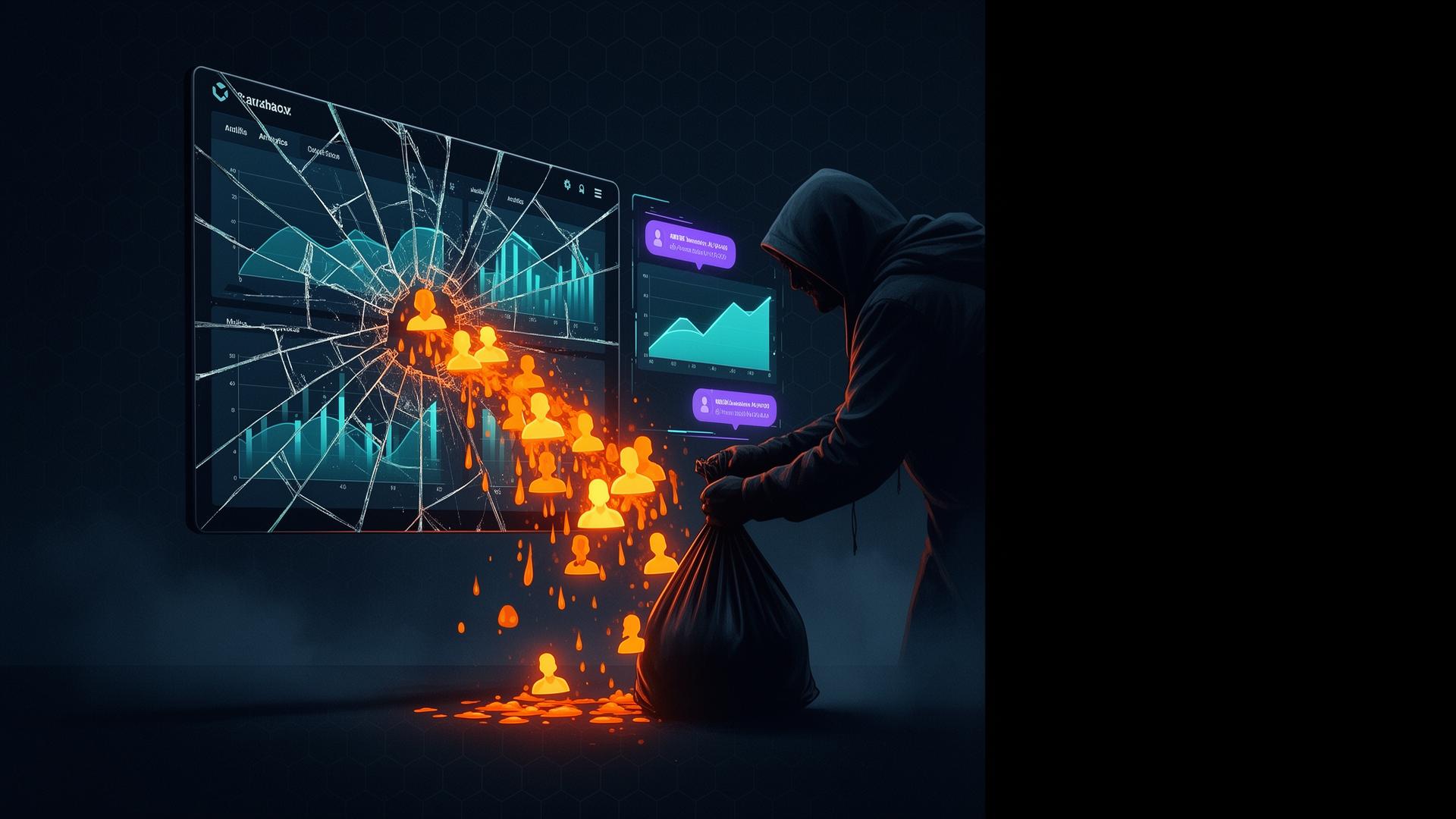
CoinTracker and the Mixpanel Breach: What Leaked and What It Means for Crypto Users
The breach was upstream. The phishing risk is yours.
CoinTracker reported exposure through its analytics vendor Mixpanel. According to its warning reported by Protos, the affected data included emails, IP-derived locations, device metadata and transaction summaries. A breach notice is a reason to tighten security, not to trust the next security email.
The Breach
Mixpanel detected a smishing campaign on 8 November 2025. Its statement says a limited number of customers were impacted. Protos reports CoinTracker’s warning about exported emails, IP-derived locations, device metadata and transaction summaries; no 2025 affected-user count is documented here.
You trusted a service. Its vendor held data. That trust chain matters.
Was CoinTracker Hacked? The Short Version
CoinTracker's own systems were not breached. Mixpanel, the analytics vendor CoinTracker sent usage data to, was — a smishing campaign Mixpanel detected on 8 Nov 2025 and reported to CoinTracker on 21 Nov 2025. CoinTracker has not published a user count for the 2025 incident.
Mixpanel’s primary statement says the smishing incident affected a limited number of customers, not every customer. Protos reports that CoinTracker emailed users on 26 November 2025 after receiving details on 21 November.
- Exposed: According to CoinTracker’s warning reported by Protos: email addresses, IP-derived locations, device metadata and transaction summaries.
- What is not established: The cited CoinTracker report does not establish password or wallet-secret exposure. OpenAI’s separate list of excluded fields applies to OpenAI, not automatically to CoinTracker.
- What to do now: Change reused or suspect passwords through the service directly, enable app-based or hardware-key 2FA where available, and watch for phishing emails that mention this breach. Never sign from an unsolicited security link.
The leak didn't take your crypto. It confirmed that you have some.
Case File Update
Checked Mixpanel’s primary statement and the cited CoinTracker reporting; corrected incident scope, data attribution and password/2FA guidance; synchronized visible and structured FAQs.
Earlier history
- Removed unsupported "1.5M users" claim for the 2025 incident; separated the 2022 breach; sources replaced.
Earlier incident: the December 2022 breach
CoinTracker had a separate, earlier incident in December 2022 via a compromised SendGrid account, which exposed about 1.6 million addresses according to Have I Been Pwned. That figure belongs to the 2022 incident, not the 2025 Mixpanel breach described in this article.
Data Breach Investigation Series
This is Part 1 of 3. Different doors, same vault. Each breach exposes how the crypto industry fails to protect your data — whether through the side door or the front.
Different doors, same vault:
Part 1
CoinTracker Mixpanel Breach
The Analytics Leak
The side door: a third-party tool leaks your email
Part 2
ShinyHunters vs Figure
The Social Engineering Strike
The front door: one phone call opens the vault
Part 3
Revolut Fake Gov Request
The Paperwork Attack
The legal door: a fake lawful request and the bank hands it over
The Hard Truth
You can do everything right. Use 2FA. Use a hardware wallet. Never click suspicious links. And still, your data can be exposed by a company you've never heard of.
Third-party risk can be hard to see. Data shared with an analytics vendor can create exposure outside the service you signed up for.
This breach didn't steal your crypto directly. It did something potentially worse: it identified you as someone who owns crypto. And that list is now in the hands of people who specialize in targeted attacks.
The Anatomy of This Breach
The confirmed entry vector is smishing: SMS phishing. Mixpanel describes unauthorized access and affected accounts, but its primary statement does not establish that an external SMS-verification provider was breached.
The CoinTracker exposure reported by Protos concerns data shared with Mixpanel: emails, IP-derived locations, device metadata and transaction summaries.
This is the nature of modern software. Your data lives in dozens of places you don't control and can't audit.
The breach was invisible. The consequences won't be.
Vocabulary, Decoded
Companies use neutral corporate language to describe data sharing. Below, we decode what each term actually means for your privacy — the real implications hidden behind the PR-approved phrasing:
"Analytics Provider"
Sounds like: A tool that helps the company understand how users interact with their product. Seems harmless.
Reality: Your email, IP address, device fingerprint, and behavioral patterns are sent to a third party. That third party has their own security — and their own vendors. You have no visibility into any of it.
"Third-Party Service"
Sounds like: An external tool the company uses. Standard business practice.
Reality: A separate company with separate employees, separate security practices, and separate attack surfaces. If they get breached, your data is exposed even if the main company has perfect security.
"Limited Data Sharing"
Sounds like: Only essential information is shared. Nothing sensitive.
Reality: Email addresses are "limited." So are partial wallet addresses. Combined with other breaches, that "limited" data creates a complete profile of a confirmed crypto holder — the most valuable target for scammers.
"Security Incident"
Sounds like: Something happened. Probably minor. They're handling it.
Reality: Your data may have been exposed. The company is legally required to tell you, but not required to tell you exactly what was taken or who has it now.
"Data Processing Agreement"
Sounds like: Legal protection. A contract that ensures your data is handled responsibly.
Reality: A document that covers the company legally. It doesn't prevent breaches. It doesn't guarantee security. It's liability management, not security management.
"SOC 2 Compliant"
Sounds like: A certified security standard. The vendor passed an audit. You're safe.
Reality: The vendor met minimum requirements during an audit window. Audits are snapshots. Breaches happen between audits. SOC 2 doesn't mean 'unhackable.' It means 'documented.'
Every "service" is a company. Every company is an attack surface. You don't get to audit any of them.
How Your Data Got Exposed
You never sent data to Mixpanel. But Mixpanel had your data anyway. Here's the chain:
You Sign Up for CoinTracker
You create an account. Enter your email. Connect your wallets. Start tracking your portfolio. Normal, reasonable, expected.
Step one was completely rational.
CoinTracker Uses Analytics
Like almost every tech company, CoinTracker uses analytics to understand user behavior. Which features get used. Where users get stuck. Standard practice. They chose Mixpanel.
Step two was also completely reasonable. For them.
Mixpanel Collects Data
Protos reports that CoinTracker’s warning identified emails, IP-derived locations, device metadata and transaction summaries among the exposed data.
Step three is where you lose visibility.
Mixpanel Detects Smishing
Mixpanel detected a smishing campaign on 8 November 2025. Its statement says a limited number of customers were affected; it does not establish an external SMS-provider breach.
Step four happened in a company you've never heard of.
Post-Breach Phishing Attempts
After data breaches, attackers use stolen information to craft convincing phishing emails. The messages and lookalike domains below are illustrative reconstructions, not verified campaign indicators:
Subject: Action Required: CoinTracker Security Update Dear CoinTracker User, Following the recent security incident, we require all users to verify their connected wallets. Your account shows 3 connected exchanges that need re-authentication. Click here to secure your account: cointracker-security[.]invalid Failure to verify within 48 hours will result in account suspension.
Translation: They know you use CoinTracker. They know you have connected wallets. The urgency is designed to bypass your skepticism.
The domain "cointracker-security[.]invalid" is NOT cointracker.io. The "3 connected exchanges" sounds specific but is generic — anyone using the product probably has connections. The 48-hour deadline creates panic.
Subject: Your CoinTracker Tax Report May Be Compromised We detected that your 2024 tax data may have been accessed in the recent incident. To protect your information, please log in and change your password immediately. For your security, we've generated a one-time secure link: ct-account-verify[.]invalid This link expires in 24 hours.
Translation: They're weaponizing real breach news. You probably heard about it. Now you're scared. Perfect timing for a fake "fix."
Notice how it references "the recent incident" — real news about a real breach. The attacker doesn't need to explain what happened; you already know. They just need to give you a button to click.
Subject: IRS Notice: Cryptocurrency Transaction Discrepancy Our records indicate a potential discrepancy in your reported cryptocurrency transactions. Information from your CoinTracker account has been flagged for review. Log in to your IRS account to verify your records: irs-crypto-verification[.]com
Translation: They know you use tax software. They know tax season creates anxiety. The IRS doesn't email you like this.
This combines breach data (you use CoinTracker) with seasonal fear (tax season). The domain is not irs.gov. The IRS sends mail, not emails. But panic makes people miss obvious signs.
Subject: Urgent: Complete Wallet Migration Before March 1 Due to the recent security incident, we are migrating all user wallets to a new secure infrastructure. To maintain access to your portfolio tracking, you must complete the migration process. Migrate your wallets now: cointracker-migrate[.]com Wallets not migrated by the deadline will be disconnected.
Translation: Wallets don't "migrate." This is credential harvesting wrapped in technical language.
The "migration" concept sounds legitimate to non-technical users. The deadline creates urgency. The threat of disconnection triggers loss aversion. All designed to make you click before thinking.
Subject: Verify Your Identity to Restore CoinTracker Access Your account has been flagged for additional verification following our security review. To prevent account lockout, please verify your identity within 72 hours. Verify now: secure-cointracker-verify[.]invalid You'll need to confirm your email and connected wallet addresses.
Translation: They want your email AND wallet addresses. Everything they need to target you specifically.
Asking for "connected wallet addresses" is pure data collection for targeted attacks. Real verification doesn't ask you to re-enter wallet addresses — those are already on file.
Red Flags: Post-Breach Phishing
- •References the real breach — Mentioning "the recent security incident" adds legitimacy. But attackers read the news too.
- •Creates artificial urgency — "48 hours," "24 hours," "immediately." Real security teams give you time to verify.
- •Uses lookalike domains — "cointracker-security[.]invalid" is not cointracker.io. Check domains letter by letter.
- •Includes specific (but generic) details — "3 connected exchanges" sounds personal but isn't. It's a guess that will be right for most users.
- •Links to password change pages — Credential harvesting is the goal. Never click email links to change passwords.
- •Threatens account suspension — Fear-based compliance. Real companies don't suspend accounts for slow response to security alerts.
- •Asks for wallet addresses — No legitimate service asks you to "verify" wallet addresses. They already have them.
Every phishing email exploits the same playbook. They all brought their A-game.
The Math: Third-Party Risk Multiplier
Let's quantify why third-party risk is worse than it seems:
The Vendor Chain
CoinTracker’s vendor incident illustrates third-party exposure: a service can share data with a provider whose compromise creates risk for its users.
The Value Calculation
Identifying an email address as belonging to a crypto-service user can make a phishing pitch more targeted. The cited sources do not establish a market price for this dataset.
The Cross-Reference Problem
This breach data will be combined with Ledger (2020), Gemini (2022), and dozens of other crypto breaches. Each breach adds context. Combined, they create profiles detailed enough for personalized social engineering attacks.
How Third-Party Breaches Become Your Problem
The following is an illustrative risk chain, not a verified account of what the CoinTracker attackers did next.
Step 1: Data Extraction
Exposed analytics data can supply emails, device details and transaction summaries for targeted scams. The reported CoinTracker fields are listed above.
The cited timeline establishes dates, not an undisclosed period of attacker access.
Step 2: Data Enrichment
An attacker could combine exposed email or device information with other data. This is a possible misuse, not a confirmed post-breach action in this case.
This is where "limited" data becomes comprehensive.
Step 3: Categorization
You're tagged: crypto user, likely US resident, uses tax software, has exchange connections. You're sorted into high-value target lists. These lists are sold or used internally.
You're not a person anymore. You're a prospect.
Step 4: Targeted Attacks
Phishing emails arrive referencing CoinTracker. Voice calls claim to be from your exchange. SMS phishing links look legitimate. Everything is personalized because they know who you are.
This step repeats indefinitely.
Step 5: Escalation
If you don't fall for email phishing, they try SMS. Then voice calls. Then SIM swaps. The attack sophistication increases because you've been identified as a valuable target.
The breach was the start. Not the end.
How This Plays Out
Illustrative scenarios, not verified accounts of individual victims.
These profiles are fictional examples of possible follow-up phishing, not documented victims of this incident.
The Tax-Conscious Holder
Uses portfolio tracking software for accurate tax reporting. Never shares phone numbers publicly. After a vendor breach, receives a call from 'IRS Crypto Compliance.' The caller knows the exchange used, approximate holdings, and that tax software is involved. No random scammer knows that.
Composite pattern: Victims report the specificity of the call is what made it believable. Generic scams get ignored. Personalized attacks get engagement.
The Privacy-Focused DeFi User
Uses hardware wallet, never clicks email links, practices good opsec. Post-breach, receives a phishing email referencing the exact analytics tool that was compromised. The email warns of 'connected wallet verification required.' The language matches how the real product works.
Composite pattern: Even security-conscious users struggle when attacks reference real products they use with accurate terminology.
The Multi-Exchange Holder
Uses multiple exchanges and tracking tools to manage portfolio. After breach data is cross-referenced with other leaks, receives a spear-phishing campaign that accurately lists which exchanges are connected. The attacker didn't guess — they had the data.
Composite pattern: Cross-referenced breach data creates profiles more accurate than any single leak. Attackers invest in data enrichment because it works.
Illustrative scenarios; no individual victim is identified.
Why Smart People Fall For It
These attacks work on intelligent, careful people. Here's why:
They Trust Institutions
When CoinTracker sends an email about a breach, users believe it. They don't check the sender domain character by character. They respond to the message, not the source.
The Data Is Specific
Generic phishing says "Dear Customer." Post-breach phishing knows your email, that you use CoinTracker, maybe even what exchanges you've connected. Specificity creates trust.
Breach Fatigue Is Real
After dozens of breach notifications, people stop paying attention. "Another breach, whatever." But attackers are paying attention. They're building profiles.
Urgency Bypasses Logic
"Verify within 48 hours or lose access." The time pressure is designed to prevent the one thing that stops scams: pausing to think. Urgency is the most reliable manipulation tool.
This doesn't require stupidity. Just timing.
Protection: The 5 Rules
- Rule 1: Assume Your Email Is Compromised Use a unique password and change any reused or suspect password through the official website. This is precautionary advice, not a claim that passwords leaked. Unique email aliases can reduce cross-service exposure.
- Rule 2: Never Trust Inbound "Security" Emails After breaches, phishing spikes. Never click links in security alert emails. Go directly to the company's website by typing the URL. If the alert is real, you'll see it there.
- Rule 3: Check Breaches Proactively Visit haveibeenpwned.com regularly. Set up alerts. Know what data is exposed before attackers use it. Being surprised by targeted phishing means you didn't check.
- Rule 4: Enable Hardware 2FA Everywhere Enable app-based or hardware-key two-factor authentication where available. SMS phishing is the reported entry vector; that does not prove that CoinTracker’s 2FA was bypassed. No second factor prevents every phishing or wallet-signature attack.
- Rule 5: Verify Through Official Channels Any communication requiring urgent action should be verified. Call the company's official support number. Use in-app messaging. Don't trust contact information provided in the suspicious message.
Got a Suspicious Message?
Use our AI-powered detector to analyze potential scams instantly.
Key Takeaways
- 1.Third-party risk is real: Your data security depends on every vendor your service uses — including vendors you've never heard of.
- 2.Breach data is cumulative: Each breach adds to your profile. Combined data is more dangerous than any single leak.
- 3.Targeted phishing follows breaches: Expect increased, personalized phishing after any breach that exposes crypto users.
- 4.Prevention beats reaction: Use email aliases, hardware 2FA, and assume breach data is already circulating about you.
- 5.Trust is transitive: When you trust a company, you're trusting every vendor they use. You don't get to audit that chain.
“Your data travels.”
You don't choose where.
Frequently Asked Questions
Sources & Citations
Research for this investigation compiled from publicly available blockchain data, security reports, and community documentation.
Mixpanel · 27 Nov 2025
OpenAI · 26 Nov 2025
BleepingComputer · 15 Dec 2025
CoinLedger Help Center · 21 Nov 2025
Have I Been Pwned · Date not published or not verified
Verification: On-chain references: none published for this case.
Methodology: Every case needs at least two independent sources before publication, plus verifiable on-chain evidence whenever a public transaction trail exists. Full standards: /methodology
Legal notice: This assessment is based on publicly available data, including on-chain records, official statements and reported incidents. It is journalistic and educational analysis, not legal advice, an accusation of criminal conduct or a court finding. Named companies, projects, domains, wallets and individuals are described as reported by the cited sources; a company name may appear because fraudsters impersonated it, not because the company did anything wrong. If you believe something is inaccurate or out of date, write to cryptostrapon@pm.me and we will correct it and log the change. Editorial policy