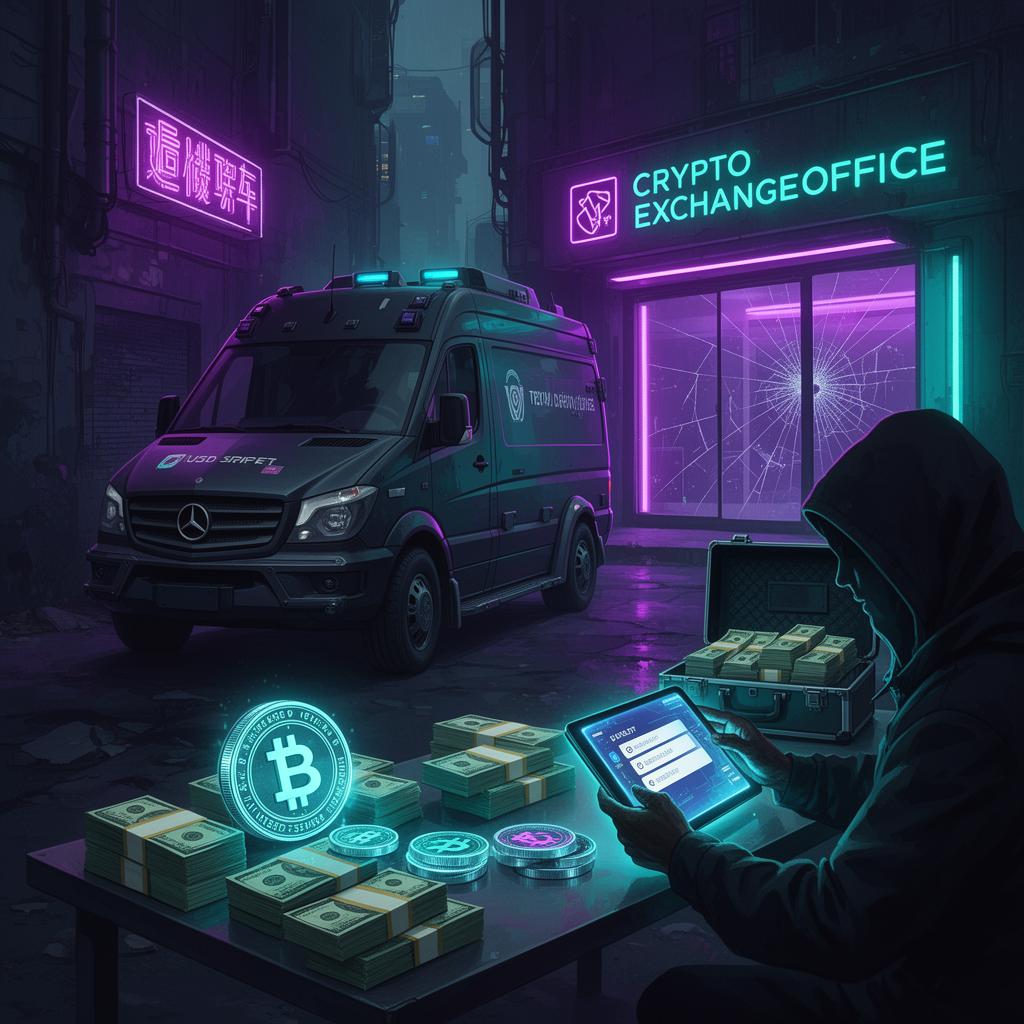
Dubai's USDT-to-Cash OTC Scam: The Armored Car Trap
A real office. A real armored car. No cash, ever.
A real office. A real receptionist. A real armored transport company you can Google. And a rate pitched near 3.66 — close to the dirham's actual dollar peg of 3.6725, just believable enough not to raise alarms. You send the USDT as an escrow hold. He smiles, takes a call, steps into the corridor. He does not come back. Your stablecoins are already moving. Every prop was authentic. Only the trade was theatre.
The Armored Car That Never Arrives
The operation mimics institutional-grade OTC desks with military precision: branded Telegram channels, professional rate sheets, tiered fee structures for volume clients, and references to armored transport companies. Every element is designed to signal legitimacy. The scammer quotes a competitive rate — just below market — because a rate that's too good triggers alarm bells. A rate pitched near 3.66 sits in the Goldilocks zone — close to the dirham's real 3.6725 dollar peg, which is exactly what makes it believable. The perfect lie isn't cheap. It's reasonably priced.
The armored car company exists. The office exists. The exchange rate exists. The only thing that doesn't exist is the intention to complete the trade.
OTC Desk Impersonation Series
This is Part 2 of 2. Both investigations expose how scammers simulate legitimate OTC infrastructure — digital and physical — to steal crypto.
Same playbook, different stage:
Part 1
The Clone
Digital Impersonation
A scammer clones your Telegram identity and intercepts the deal
Part 2
The Stage
Physical Infrastructure Fraud
Armored cars, real offices, tiered fees — a staged illusion
Case File Update
Marked the $5M scenario as illustrative; sources replaced with verified news and FATF reports.
The Hard Truth: Why Cash-to-Crypto Is the Perfect Crime
Cash-to-crypto OTC has a structural vulnerability that no technology can fix: the crypto transfer is irreversible and instant, but cash verification takes time. In the window between 'crypto sent' and 'cash confirmed,' the entire fraud happens. The scammer needs nothing except that gap.
A tiered fee structure that drops as the deal size grows creates a psychological anchor. You're negotiating fees when you should be questioning existence. Nobody who has access to large stablecoin balances needs your cash at below-market rates. They have Binance. They have Coinbase. They have Cumberland. They don't need a stranger on Telegram.
The 'first deal' is designed to be large enough to be profitable but small enough to seem like a 'test.' There is no test. There is no second deal. The first deal IS the scam. Everything before it was casting.
The armored car was the MacGuffin. You were looking at the logistics while your USDT was already gone.
The Five-Act Fraud: From Group Chat to Ghost Wallet
Act one: The scammer joins high-value OTC Telegram groups — or creates one — and posts rate sheets mimicking institutional desks. The branding is polished: logos, rate tables updated daily, references to 'compliance officers' and 'settlement teams.' They've been in the group for weeks, answering questions about rates, building a post history that looks organic. Patience is the most expensive ingredient in a scam. Most amateurs can't afford it.
Act two: First contact. You ask about converting USDT to local currency. The scammer doesn't push. They ask about your volume, your timeline, your preferred denominations. They explain their tiered fee structure, with discounts for larger volumes. They mention armored transport — implying they handle this daily. The detail about denominations is the master touch: nobody who's faking it discusses whether you want large bills or small. Specificity is the currency of trust.
Act three: The meeting. It's at a real office — sometimes a co-working space rented for the day, sometimes a café near a known financial district. The scammer may not even be present — a 'representative' handles the in-person component while the controller monitors from a different location. You send the USDT as a 'escrow hold.' The representative confirms receipt. The cash 'is being prepared by the logistics team.' One hour passes. Two. The representative takes a call, looks concerned, explains a 'compliance delay.' By the time you realize there's no cash and no armored car, the USDT has been split across four wallets and is bridging from Tron to BSC. The meeting wasn't for the deal. It was to keep you offline while the money moved.
Sent with confidence. Received with gratitude. Returned with silence. The armored car was the story. The wallet was the destination.
Vocabulary, Decoded
These terms sound legitimate until you understand what they mean in a scammer's mouth:
"Armored Transport" / "Secure Logistics"
Sounds like: Professional cash transport companies with licensed vehicles, insurance, and GPS tracking. The kind banks use for ATM refills.
Reality: The scammer names a real armored car company to add credibility. No booking exists. No vehicle is dispatched. The reference is there to make you believe the operation handles this volume routinely. You're not booking transport — you're buying a prop for the stage. The armored car is the set design. Your USDT is the ticket price.
"Tiered Fee Structure" (25K / 20K / 15K per tranche)
Sounds like: Volume-based pricing that decreases with larger deals. Standard in institutional finance. Shows sophistication.
Reality: The fee structure exists to make you focus on negotiating cost rather than questioning legitimacy. You're haggling over 25K vs 20K while 5 million is about to disappear. The tiered pricing also creates urgency to do a larger deal — 'If you bring 10M, the fee drops significantly.' More volume = more stolen. The discount is the accelerant. Your greed is the fuel.
"Settlement Window" / "Compliance Delay"
Sounds like: The normal time required for financial institutions to process large transactions. Banks have settlement periods. So do legitimate OTC desks.
Reality: A manufactured delay that buys the scammer time to move your USDT to untraceable wallets. Every minute you wait 'for compliance' is a minute your funds are being split, bridged, and laundered. The delay isn't the problem — it IS the operation. Patience is a virtue. For them.
The Machine: Step by Step
Step 1: The Rate Sheet
Scammer posts daily rate updates in OTC groups. A rate pitched near 3.66 — close enough to the dirham's real peg to look competitive, not suspicious. The rate is the bait. The specificity is the hook.
Step 2: The Negotiation
You discuss volumes, fees, denominations. The scammer never rushes. They ask smart questions about your compliance needs. They mention their 'settlement team' and 'logistics partner.' They're not selling you a deal. They're selling you a character.
Step 3: The Meeting
Real office. Real representative. Sometimes real business cards. The in-person component exists to give you confidence to send the USDT. Once sent, the representative stalls with 'compliance delays' while the controller drains the wallet. The meeting is the lock. The USDT transfer is the key.
Step 4: The Silence
Representative takes a 'phone call' and never returns. Telegram accounts go dark. The office was a day rental. The armored car number goes to voicemail. The exit is always silent. The loudest thing in the room is your realization.
Step 5: The Bridge
USDT splits across multiple wallets within minutes. Bridges from Tron to BSC to Ethereum. Swaps to ETH, then to a mixer. The trail goes cold fast. Sent with confidence. Gone without a trace.
Real OTC Messages
This is the theatre script. The words sound operational; the purpose is to make you release crypto before cash exists.
Today rate 3.66 AED per USDT. Minimum first tranche required. Logistics fee applies. Armored transport available after wallet confirmation.
Translation: Negotiate the fee while we prepare the wallet that receives your irreversible transfer.
The rate is believable on purpose. The fee structure keeps your brain inside the deal instead of outside verifying the operator.
Representative will meet you at the office. Cash team prepares notes after blockchain confirmation. Please send hash first so compliance can release the vehicle.
Translation: Send crypto first, then wait for a car that was never booked.
Legitimate cash OTC does not require crypto to leave before cash is verified. The 'hash first' line is the trapdoor.
Compliance needs 30-45 minutes. Driver is on standby. Do not worry, funds are confirmed. We are waiting for release code from logistics.
Translation: Stay seated while your USDT is split, bridged, and laundered.
A delay after payment is not a delay. It is the exit window.
Red Flags: The 8 Signs You're Being Set Up
If the cash isn't on the table before the USDT leaves your wallet, it was never going to be.
The Economics: Why This Scam Scales
Setup Cost: ~$500
Day office rental ($200). Prepaid SIM cards ($20). Business cards ($30). Professional Telegram channel ($0). The entire operation costs less than a dinner at Nobu.
Average Take: Varies Widely
The first deal targets large volumes. Even failed attempts often extract 'good faith deposits' before the victim gets suspicious.
Recovery Rate: <2%
USDT bridged across chains within minutes. No jurisdiction. No KYC on the scammer. The 'representative' is a hired actor who doesn't know the controller's identity.
Scalability: Unlimited
One controller can run 3-5 simultaneous operations across different groups. The representative changes every deal. The office changes every deal. Only the Telegram channel persists.
Confused by the Jargon?
Explore our glossary of 307 crypto scam terms with real-world examples.
Why Smart People Fall for Armored Car Theatre
This scam targets experienced traders, not beginners. Here's why it works:
The 'Institutional' Frame
Rate sheets, fee structures, and logistics references mimic institutional OTC desks. Experienced traders recognize the format and trust it. The scam leverages expertise against itself.
The Physical Meeting
In-person contact creates a false sense of security. You've seen the office. You've met the representative. Surely they wouldn't scam you in person? They would. And they did.
The Competitive Rate
A rate near 3.66 is good but not unbelievable — close to the dirham's real 3.6725 peg. It sits in the credibility sweet spot — just enough to be attractive, not enough to trigger suspicion. The rate IS the lie.
The Sunk Cost
You've spent days negotiating, traveled to the meeting, coordinated with your team. Walking away feels like wasting all that effort. The scammer planned for this. Your time is their investment.
The best marks aren't naive. They're experienced enough to recognize a professional operation — and trusting enough to believe it's real.
Protection: The 5 Rules of Cash-to-Crypto
Every legitimate OTC desk follows these principles. If your counterparty doesn't, walk away.
- Cash first, crypto second. In any legitimate cash-to-crypto exchange, the cash is verified and in your possession BEFORE you send USDT. No exceptions. No 'escrow holds.' No 'simultaneous transfers.'
- Verify the company registration. Check the actual commercial registry in the operating country. Not a PDF they send you. Not a website they created. The official government database.
- No rented offices. Legitimate OTC desks have permanent offices with their name on the door. If the meeting is at a co-working space, hotel lobby, or 'partner office,' you're looking at a set, not a business.
- Meet the controller, not the representative. If the person at the meeting isn't the same person running the Telegram channel, ask why. Legitimate operators don't outsource client meetings to strangers.
- Use licensed escrow. Real OTC desks use regulated escrow services with legal frameworks. If they insist on direct wallet transfers, they're avoiding the one mechanism designed to protect you.
Think You Can Spot a Scam?
Test your knowledge with real scam scenarios from our investigations.
Got a Suspicious Message?
Use our AI-powered detector to analyze potential scams instantly.
Keep digging
The token that looks like Tether and settles like nothing is taken apart in our Flash USDT scam investigation, with the contract address that exposes the fake balance and the 10-second check to run before any trade.
Settlement with no referee has its own pattern library in our hub on OTC desk and cash settlement fraud.
Where the stolen coins go afterwards is the subject of our hub on crypto laundering networks.
Key Takeaways
- 1.A rate pitched near the real 3.6725 dirham peg is the hook — competitive enough to be believable, not cheap enough to be suspicious.
- 2.Armored car references create institutional credibility for a $500 operation.
- 3.Tiered fee structures make you negotiate cost instead of questioning legitimacy.
- 4.'Compliance delays' buy time to bridge USDT across chains.
- 5.Physical meetings create false security — the office was rented for the day.
- 6.Cash MUST be verified before USDT leaves your wallet. No exceptions. Ever.
“The armored car was real.”
Your money just wasn't inside it.
Frequently Asked Questions
Sources & Citations
Research for this investigation compiled from publicly available blockchain data, security reports, and community documentation.
The National · 22 Nov 2024
Cointelegraph Magazine · 8 Apr 2022
Gulf News · 3 Jun 2022
Gulf News · 31 Dec 2025
The Tribune (India) · 10 Apr 2026
Verification: On-chain references: none published for this case.
Methodology: Every case needs at least two independent sources before publication, plus verifiable on-chain evidence whenever a public transaction trail exists. Full standards: /methodology
Legal notice: This assessment is based on publicly available data, including on-chain records, official statements and reported incidents. It is journalistic and educational analysis, not legal advice, an accusation of criminal conduct or a court finding. Named companies, projects, domains, wallets and individuals are described as reported by the cited sources; a company name may appear because fraudsters impersonated it, not because the company did anything wrong. If you believe something is inaccurate or out of date, write to cryptostrapon@pm.me and we will correct it and log the change. Editorial policy